Building The Great Wall Of China
Great Wall of China Wikitravel. Great Wall of China. The Great Wall of China Chngchng stretches westward across the provinces and municipalities of Liaoning, Hebei, Tianjin, Beijing, Inner Mongolia Autonomous Region, Shanxi, Shaanxi, and Ningxia Autonomous Region to Gansu in the west. UnderstandeditThe Great Wall of China at Jinshanling. The Great Wall of China can be visited at many places along its length of several thousand kilometers. Ship Simulator 2008 Pc Game Full Version. Its condition ranges from excellent to ruined, and ease of accessibility varies straightforward to quite difficult. Building The Great Wall Of China YoutubeNote that different sections also each have their own admission fees, e. Jinshaling to Simatai then you probably have to pay twice. HistoryeditGreat Wall of China at Badaling. The Great Wall, as we know it, is actually a series of several walls built at different times by different emperors. The categories below are non exhaustive, and all refer to wall systems rather than single monolithic walls. First Great wall built by the Qin Dynasty 2. BCSecond Great Wall built by the Han Dynasty 2. The Great Wall of China All things you want to know about interesting facts, who built, why built, how built, culture, legends and how to visit it. The Great Wall Of China Unbelievable Secrets Unknown Facts This video takes you to a ride full of unbelievable secrets and unknown facts about The. BCThird Great Wall built by the Jin Dynasty 1. Pool Heat Pump Specifications. ADFourth Great Wall built by the Ming Dynasty 1. First Great WalleditFirst Great Wall was ordered built in 2. BC by Qin Shih Huangti after he had finished consolidating his rule and creating a unified China for the first time. The wall was designed to stop raids by the Xiongnu raiders from the north. First Great Wall. Although the wall worked at keeping out enemies, it did nothing to stop internal pressures which lead to a regime change in 2. Building The Great Wall Of China Video Youtube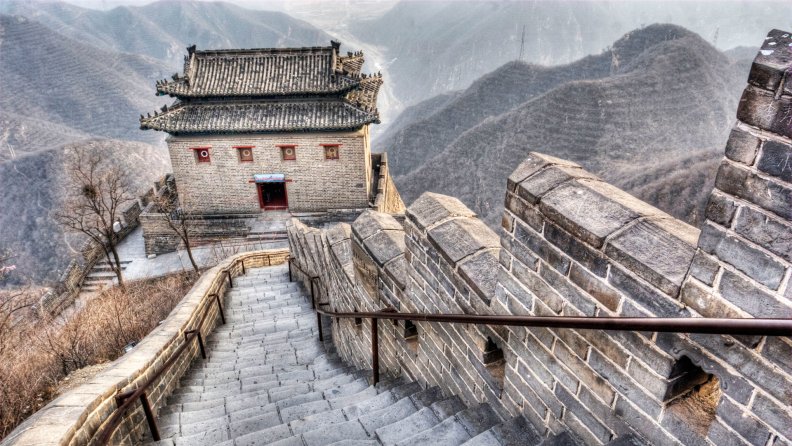 BC and the new leadership of the Han Dynasty. The first Han emperor, Gaozu, was quick to see the benefits of the wall against the raiders and ordered more wall to stretch out as far as Zhaoxiang, Gansu. Second Great WalleditOver 7. Dialogic Voice Board Drivers. Han Dynasty were still fighting the raiders since the Great Wall had been left to deteriorate and the raiders had breached it in several places. In 1. 30 BC, Emperor Wudi of the Han Dynasty embarked on a program of extending, rebuilding and fortifying the original First Great Wall. After the emperor finished adding more regions under his rule in 1. BC, he ordered a major expansion program that created the Second Great Wall, outposts in Zhangye, Wuwei, Jiuquan, Dunhuang and Yumenguan in Gansu and Lopnor and other outposts in Xinjiang. The Great Wall was extended down the Hexi Corridor through which the Silk Road traders would travel on the way to and from the West. When the Han Dynasty fell apart into the three kingdoms of the Wei, Shu and Wu, the northern Wei kingdom decided to continue maintaining the Great Wall so that they could keep out the Rouran and Qidan nomads from the northern plains. Despite the constant maintenance, the Wall kept being breached by the Rouran nomads. Additional walls were built inside and outside of the Great Wall by the different kingdoms. Eventually the Wei kingdom merged with the unifying Sui kingdom and was overthrown by the Tang Dynasty in 6. AD. Nothing more was done to the Great Wall until the reign of the Liao and Song dynasties. The Liao Dynasty controlled the north while the Song Dynasty controlled the south. The Liao were troubled mainly by a tribe in the northeast region of China called the Nuzhen known as Manchu in Mandarin so they built defensive walls along the Heilong and Songhua rivers. These failed to stop the raiders from coming south. Third Great WalleditIn 1. Nuzhen established the Jin Dynasty and since they were from the north themselves, understood that the Mongols were right behind them. The Jin emperor ordered the construction of a Third Great Wall to be built in Heilongjiang Province and Inner Mongolia Autonomous Region. The walls built had the characteristics of having ditches running along the walls full length. Despite the impressive fortifications built, the Mongols overthrew the Jin in 1. Yuan Dynasty. During the Yuan dynasties rule, the Wall fell into deep disrepair and in 1. Chinese Ming Dynasty walked right in and took control. The Ming Dynasty, after getting rid of the Mongols, determined that they would never be taken again by outsiders. The first emperor of the Ming Dynasty, Hongwu, re established manning of the Great Wall, fortresses and garrisons were built along the wall, and the fort at Jiayuguan was built in 1. The second Ming emperor, Yongle, turned his focus outward from the empire and sent out explorers and diplomats into the big, wide world. Fourth Great WalleditIt was not until the battle of Tumu against the Mongols that renewed interest in reinforcing the Great Wall occurred. Between 1. 56. 9 and 1. Great Wall were built, the Fourth Great Wall. The reinforced wall managed to repel Mongols several times. The Manchu retook China in 1. Qing Dynasty. From this point on, the Wall slowly started to fade away while stone and rocks were taken from the Wall for building projects and homes. The Cultural Revolution definitely took its toll out on the wall when local people and local governments were encouraged to help dismantle the Great Wall. It was not until 1. President Deng Xiaoping started a restoration and protection project of the Great Wall. In 1. 98. 7, the Great Wall was declared a World Cultural Heritage Site by UNESCO. LandscapeeditThe geography of Northern China ranges from mountainous in northeast Liaoning and Hebei provinces, through the grasslands of Ningxia, semi arid desert of Chinas loess plateau, and borders the sand dunes of the Tengger desert of Inner Mongolia. It is the area around Hebei and Beijing that most people associate with the Great Wall, but most of the Great Wall lies in the desert regions of the country. Flora and faunaeditChinese wildlife is diverse, considering all of the different habitats available along the length of the Great Wall. From the rare Siberian tiger in the northeast to the protected and rare Giant Panda which lives in southern Gansu, Sichuan, and Shaanxi, you never know what you might see on a given day. Wild mammals can be found in the north, such as the Manchurian weasel, brown and black bears, northern pika, and mandarin vole. Deer species include Sitka deer, roe deer and the long sought after spotted deer, which has many uses in Chinese medicine. The birds of the region include various pheasants, black grouse, pine grosbeak, various woodpeckers, mandarin duck, and the fairy pitta, a rare migratory bird. Cranes are especially revered in China. Common, demoiselle, white napes, hooded, and red crowned cranes all breed in China. You can find many tonic plants along the Great Wall, such as the rare ginseng Panax ginseng. Chinese medicine has had many thousands of years to discover and use these tonic plants for the benefit of mankind. ClimateeditNorthern China has all four seasons and they arrive with a vengeance. Summer and winter temperatures normally reach extremes of over 4. Celsius 1. 05 F and 2. Celsius 4 F respectively. You may use the Beijing Transportation Card Yikatong while going to the Great Wall see the details about the card on in the Beijing Get around section. Badaling and JuyongguaneditPublic bus Take bus number 8. Beijing Transportation Card, air conditioned coach bus to Badaling takes 1. The last bus from Beijing to Badaling leaves at around 1. Badaling to Beijing at around 1. Arrive early if you desire a seat. Reach the bus departure point by exiting from Exit A of Jishuitan subway station, Line 2. Great Wall of China Picture of Great Wallcopyright Hans Nyberg panoramas. Privacy Policy Ipanoramas. VRWAYImportant info about Copyright All panoramas featured at panoramas. Linking directly to the movies Quicktime or Flash is strictly forbidden. If you which to use any of the panoramas for any purpose, commercial or editorial you are requested to contact the photographer who has the copyright and is listed on all fullscreen pages. Links to panoramas. You are allowed linking directly to the panoramapages using a small screenshot as long as it is used directly as a link or associated with a link. Please also provide the name of the photographer and a link to the homepage.